
Punk rock is the best music. That’s pretty much an established fact, right? You can disagree, of course. Everyone’s allowed to be wrong.
But, even if you do disagree, there’s no denying a few things about the culture of punk. Punk is inherently artistic and independent. It is also a term so broad that you could absolutely detest one branch of punk music and love an entirely different one. The poppy hooks of Buzzcocks and Mr T Experience aren’t your thing? That’s OK. Here’s Aus Rotten and the Germs. Not into the Mohawks of Rancid and The Exploited? Fine, no problem. Dig out a Descendents record instead.

Punk has something for everyone, but what it really has—what sets it apart from many other genres—is a desire for authenticity and a drive to just get on and do things yourself.
DIY is the order of the day. For every corporate-backed heavy-hitter, like the Offspring or Green Day, there’s an FYP or the Queers slogging it out in relative obscurity. And bands get a lot more obscure than those, who are actually heavy-hitters in their own right. In fact, while people in my school were listening to Britpop, I was discovering truly obscure punk bands in the dark corners of angelfire.com and by talking to people in the Screeching Weasel chatroom.

But what does punk have to do with horror?
Well, there are obvious links through bands like Leatherface or the Misfits, but I’m interested in another aspect of horror…
Just as every genre has big-hitters, horror is no exception. Again, for every Stephen King there’s a Brian Keene and for every Keene there’s a T Fox Dunham. The publishers are similar. Where the mainstream punkers are represented by Columbia or Warner Brothers, so too most horror movies and novels come from major film studios and supersized publishing houses. But there is something underneath.
In my view, Sam Raimi and Peter Jackson have more in common with Todd Congelliere (FYP / Recess Records) and Brett Gurewitz (Bad Religion / Epitaph Records) than they do with Orson Welles or Kenneth Branagh. As great as Welles and Branagh are, they started their careers in the realm of prestige. No such glory for Raimi and Jackson.
The Evil Dead and Bad Taste are punk rock movies, through and through. The scrappy production, homemade special effects, acting despite having no damn acting ability — they got on with it and they made it work. And we love them for it, right?

That same spirit is what brought me to starting Dreadstone Books. I went from being a punk rock kid (though I will always be that), listening to bands like the Klopecs, the Retreads and the Smurfs, while my peers were arguing about Blur and Oasis, to recognising that even in publishing you sometimes have to just get on and do it yourself.
The bands I listened to back in those days of digging through Lookout! Records compilations had a great habit of releasing split records. It’s a genius idea, to be honest. That is what I wanted Dreadstone to do. And that is where the Deadly Duos idea was born. Two authors united by a common theme to deliver punchy horror fiction straight to the readers who are crying out for it.


Trouble is, distribution. The capital to release books is just too large a barrier to take seriously for anyone who doesn’t want to remortgage their home or who just hasn’t got the drive and charisma for a powerful crowdfunding campaign. Where does that leave us? Well, the old independent record companies set the blueprint, but I found that I simply couldn’t match them. It’s not like I can press a couple hundred 7-inch records and sell them at shows as I tour the country, like many of the bands on independent punk labels did and probably still do.
Authors don’t play shows. They may do readings every now and then. They may attend conventions, where they compete for sales against several other authors. But I can’t keep a garage full of paperbacks in hopes that I might lug a boxful to a Christmas Fair in December. So, I am forced to play a different game.
Amazon.
The Ramones, Bad Religion, The Clash, Hüsker Dü — these bands were all on major labels. Were they sellouts? Maybe, but I don’t think so. They took their chances, that’s all.
Publishing in 2026 seems to have fewer chances. For many, Amazon is the only game in town. And what does Amazon do? It provides a platform and takes a sizeable cut for that privilege. The bands I mentioned, at least, had their studio time paid for by their labels. Amazon doesn’t provide anything like that, because it is not a publisher, and, to be honest, that’s fine! But there are other options.
Authors can sell e-books directly from their own websites. However, this method doesn’t have anywhere near the reach or organic growth you can expect from a major distribution platform. There are also independent outlets doing great things. Drew Stepek is a legend in the indie horror sphere. His Godless.com is a true driving force for independent horror fiction. That’s about as punk as it gets.
So, let’s be like Raimi and Jackson. Let’s embrace the creativity of independence. Amazon serves a vital purpose for underground publishing, but let’s also support our lifelines to true artistry and connection.
Be a punk rocker, even if you don’t like punk rock. When you find a horror website, visit it and subscribe. When you see a horror press, follow it. When you read a book written by an indie author, review it. Support the things that make life interesting. Keep it punk, keep it horror, and never stop being weird.
ABOUT THE AUTHOR:
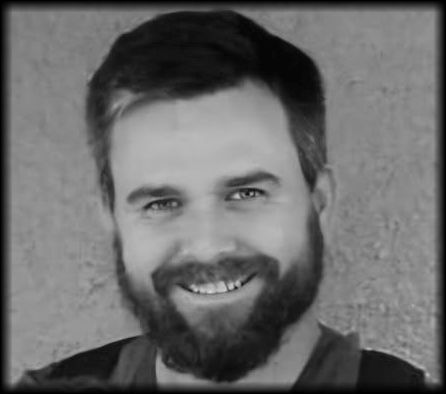
T. M. McLean (Tim) is a dark fiction author living in the Netherlands with his wife and twin sons. His short story collection Stingers (co-authored with Noel Osualdini) was a finalist for a Shadows Award in 2024. Tim’s debut transgressive horror novella, Parable of the Web, is now available exclusively on Godless. As the owner of Dreadstone Books, Tim is very excited about the Deadly Duos series, which just launched with two titles!
Dreadstone Books: www.dreadstonebooks.com
Deadly Duos: Funfair Frights is out now. Get your copy here: https://mybook.to/Funfair
Discover more from Weird Wide Web
Subscribe to get the latest posts sent to your email.

