
💘💕💗💝 Hello, Weird Webbers! It’s me, back again with some of the strangest Valentine’s Day traditions from around the world. 💘💕💗💝
The ancient Greeks and Romans used the practice of ornithomancy, or reading omens by watching the actions of birds, to predict the future. People believed the first bird an unmarried woman saw on Valentine’s Day was the symbol of the kind of man she would marry. A swan was a loyal partner for life; a dove was a kind-hearted person; and a blackbird meant she’d marry a member of the clergy or someone who did spiritual work.

During Victorian times people would often send vinegar Valentine’s or letters telling of all the nasty things they hated about someone. It was said to ease the heart of it’s hurting.
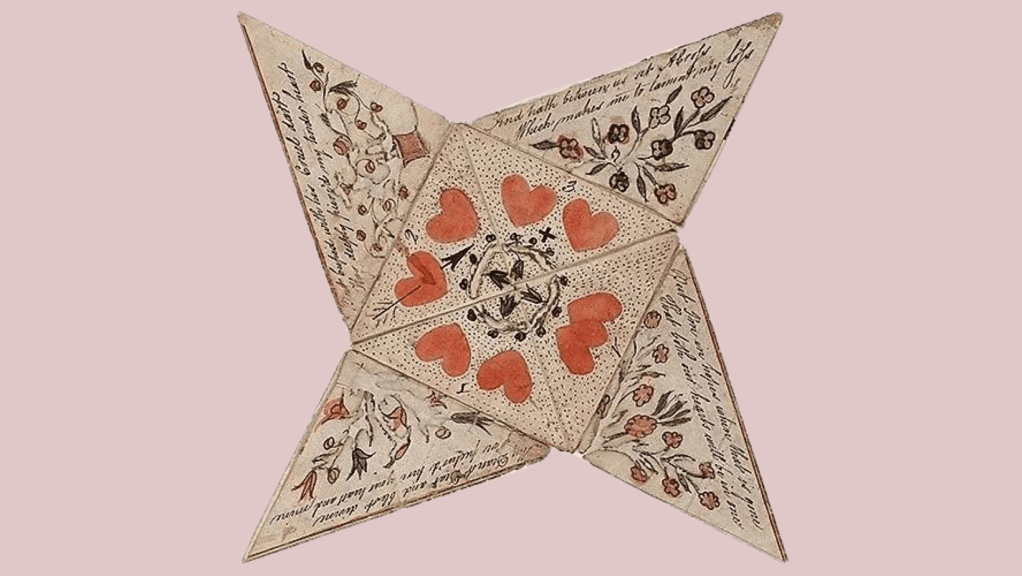
The Victorians were also famous for creating puzzle purses, which were intricately folded pieces of paper that had to be folded in the correct order so you could read the poems in them.
The Victorians sent violets and not roses because Claudius imprisoned Saint Valentine and he used violets to make ink for sending his messages.
The Victorians also had a language of flowers. Depending on what color flower you received there was a different message. For example, white was for innocence, and yellow was for jealousy.
During the Roman festival Lupercalia, in mid-February, women would pin the name of their love interest on their shirt sleeve.
People in Wales commemorate Saint Dwynwen, the Welsh patron saint of lovers, on January 25. The Welsh traditional gift is a : the love spoon. In the 17th century, Welsh men would carefully whittle an intricate wooden spoon for the woman they loved. You can still buy these beautiful spoons in Wales now.

A chapel in Padua called Oratorio di San gives children small keys to ward off epilepsy.
A gentleman during Victorian times would send a single glove to his chosen valentine hoping she would wear the glove on Easter Sunday as a sign she returned his love.
The Victorians would spend hours making “gaudy” cards with lace, ribbons, and foil to send their Valentine’s.
At night in Victorian cemeteries kids would look for signs of who their true loves would be.

In Japan, it is the girls who spoil the men with chocolates.

Gaekkebrev – a Norwegian tradition from the 18th century – lets secret admirers pen poems to their beloveds, before cutting intricate patterns into the paper and pressing a small white Snowdrop flower inside. The ‘joke’ comes from the letter’s signature – or rather, it’s absence. Instead, budding poets sign off with a dot for each letter of their name. If the lady guesses who her admirer is, she wins an Easter egg at Easter. If not, she must give him one, instead.
OKAY, thank you for reading. This has been another weird holiday article from Nora B. Peevy, reminding you to keep it weird out there!
Discover more from Weird Wide Web
Subscribe to get the latest posts sent to your email.
 Weird Wide Web