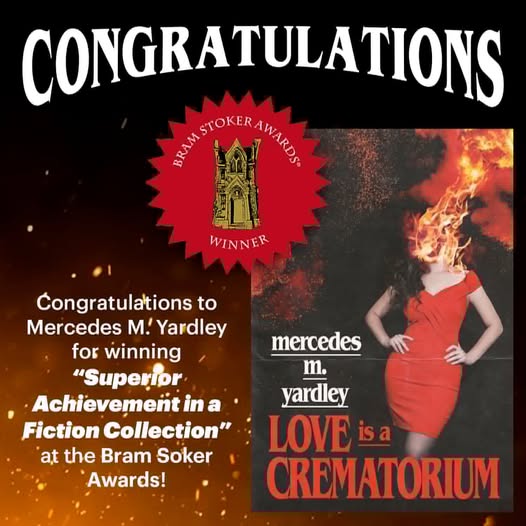
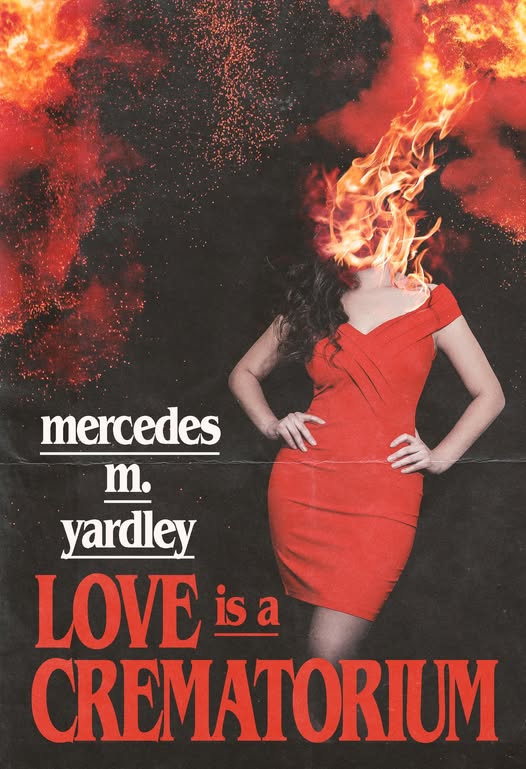
At the time of this interview (conducted the first week of June 2025), Love is a Crematorium by Mercedes M. Yardley was nominated for a Bram Stoker Award. On June 14th, 2025, Love is a Crematorium received the award, bringing home the author’s third Bram Stoker! The following interview is presented in its original form.
Tear Stained Pages: An Interview with Mercedes M. Yardley, by Devin M. Anderson
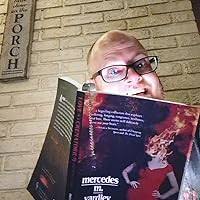
When I had the opportunity to buy a signed copy of Mercedes M. Yardley’s newest book, I jumped at the chance. Little did I know that I’d be in store for an emotional rollercoaster that would take me from tears of sorrow, to gut-wrenching terror. After finishing, I just knew I had to ask for an interview. And guess what? She said yes!
Devin M. Anderson: Mercedes, thank you for agreeing to answer some questions about your most recent and already Bram Stoker nominated book, Love Is A Crematorium. Congratulations on the nomination! How do you feel about it receiving such high accolades right out of the gate?
Mercedes Murdock Yardley: Thanks, Devin! It always makes me happy when people seem to enjoy my work. Love is a Crematorium is certainly very personal, and so that makes it even more meaningful. It’s the Little Collection That Could and I’m very proud of her. I’m glad people are interested in what I put out.
DMA: Your story, “Clocks”, perfectly captures one of my greatest fears, and I’ll admit without an ounce of shame that I ugly cried all three times I’ve read it.
Where did you come up with the idea to revamp “The Story of the Youth Who Went Forth to Learn What Fear Was” by the brothers Grimm into a story about a young autistic man? Was this inspired by an event in your life raising autistic children?
MMY: I love using fairytales as a skeletal structure for my work. Little Dead Red, “Urban Moon,” and “Clocks” are all retellings. “The Story of the Youth…” has always been one of my favorites. I was telling it to somebody, and in the Grimm’s version, the boy’s wife takes a bucket of cold water filled with minnows, and dumps it on the boy while he sleeps. He wakes up shivering, and she says, “That’s how fear feels.” While I was saying this, I immediately thought of my son and all the teaching we did to not only allow him to care for himself as much as possible, but to assimilate into society. He doesn’t understand things that come easily to most people, just like this boy.
I also ugly cried while I wrote it. Hard. One day my husband and I will be gone and what will happen to our son then? I was simply writing about something I worry about every single day.
DMA: “The Making Of Asylum Ophelia” is probably one of the most beautifully tragic stories I’ve had the pleasure of reading. The idea of being groomed for madness struck me as particularly wicked. What was the most interesting part of blending Gothic horror into a modern setting? You’ve always struck me as a fierce woman. How did writing someone brought up as a so-called proper, demure young maiden challenge you?
MMY: Thank you! I love this story. I like discussing the belief that a broken woman is beautiful. “Stay in your lane, use your dulcet voice, and be pretty, darling, because that’s how you’re most useful.” It was fun to use the Walmart parking lot as “the moors,” and explore how Ophelia sees the world thanks to her mother’s influence. I appreciate that you think I’m fierce, but I was brought up as a very good girl in a religious, conservative community. My mother was quite progressive, but I didn’t learn to speak up until years later.
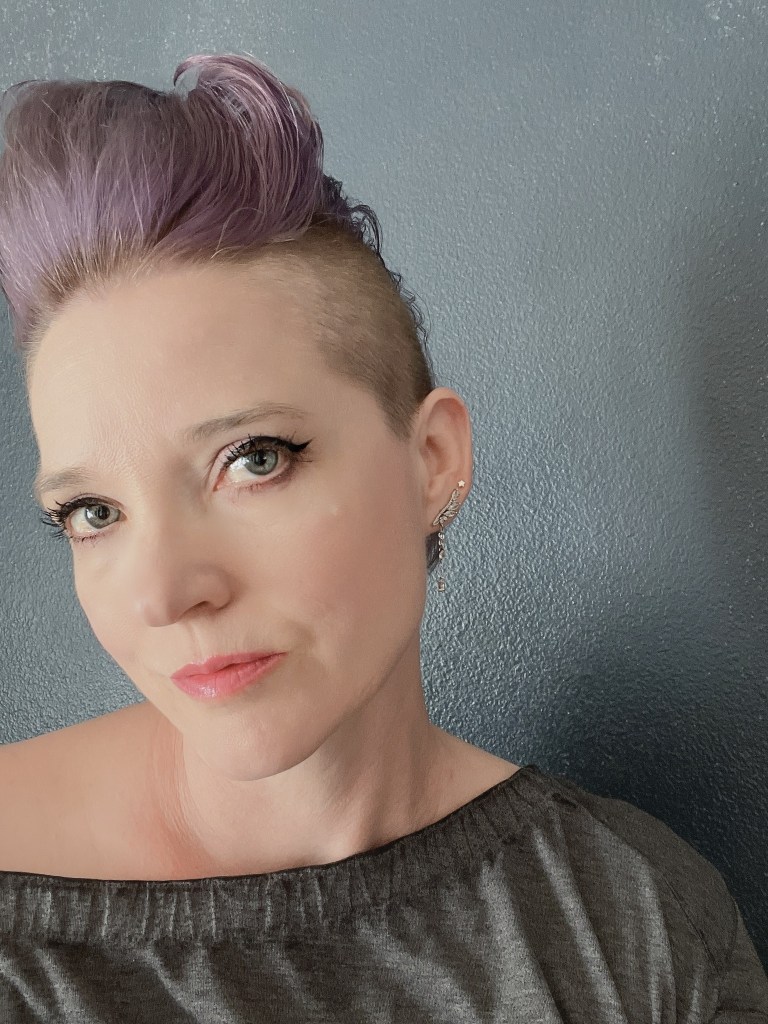
DMA: “A Threadbare Shirt” also made me cry, but this time, tears of joyous memories from raising my own autistic children. The little idiosyncrasies that make them unique shined through in this story so honestly. When can we expect this memoir to be published? Because I for one am pre-ordering it immediately.
MMY: Thank you so much! The memoir is about halfway complete. I have an agent who would like to see it by the end of the year, and that really isn’t so far away! I want people to have an accessible way to learn about Williams Syndrome, especially if a loved one has been diagnosed with it. Your world fractures a bit whenever there is a life-changing diagnosis, and I want at least one aspect to be a little simpler.
DMA: I would be remiss to leave out “Water Thy Bones”, because it gave me the most visceral reaction out of all the stories in the book. During the climax, I actually got light-headed and slightly nauseous. Now, it might have been my gallbladder needing to be taken out the following day, or it could be because I was once a self-injurer myself, but I’ve never felt that kind of physical reaction from reading a book before. How did you turn a murder into such a beautifully disgusting metamorphosis story?
MMY: “Water Thy Bones” is multifaceted. It’s about self-harm, definitely, but it’s also about being minimized as a person, about being loved for who you are, and about really seeing other people. I’m not a fan of body horror and don’t care for it normally, but this was the visceral punch in the gut I needed for this particular story. I’m quite pleased it had that effect on you! Yes, I suppose it’s a murder, but it’s more of a sacrifice. An unwrapping. It’s quite lovely in its brutality.
DMA: The title story was the longest in the collection and also arguably the saddest. It reminded me of the song 18 And Life by Skidrow. What sort of music did you listen to while writing it? Where did the characters come from? Is this purely a cautionary tale, or was there a real world basis for the way it played out?
MMY: Oh, man, what was I listening to when I wrote this? I don’t remember. A little bit of everything. I think I was really into Woodkid, Au Revoir Simone, and KALEO at the time. Kelly was loosely based on a friend of mine, who had that general goofy awkwardness. Joy was made from pieces of all of us. It isn’t meant to be a cautionary tale; it’s just a real story about real people. I wanted them to have a happy ending, but it just didn’t fit. It felt hollow. Bad things happen and we don’t always get the ending we want.
DMA: Thank you so much for taking the time to answer my questions about such an amazing collection of short stories. Is there anything else you’d like to add? What are you working on now?
MMY: Thank you for taking the time to ask such wonderful questions! Right now I’m working on a multi-author book series, as well as two books (Darling and Paradise) that will be published through Ruadán books in the next two years. And the Williams Syndrome memoir that “A Threadbare Shirt” comes from. And a few short stories, and other things. I like to spin a lot of plates.
DMA: Well, I can’t wait to read them all. This may be the first Mercedes M. Yardley book I’ve read, but it certainly won’t be the last!
Devin M. Anderson is a writer, poet, and stay at home dad to two beautifully brilliant autistic kiddos. A mental health advocate, he himself battles with Borderline Personality Disorder, and PTSD. His work has previously been featured in the anthology Hotel Macabre vol.1, the anthology Sleeve of Hearts, the anthology Piece by Piece, The Horror Zine Magazine’s Spring 2025 issue, as well as appearances in Morsus Vitae, The Horror Zine, and Alien Buddha Zine.
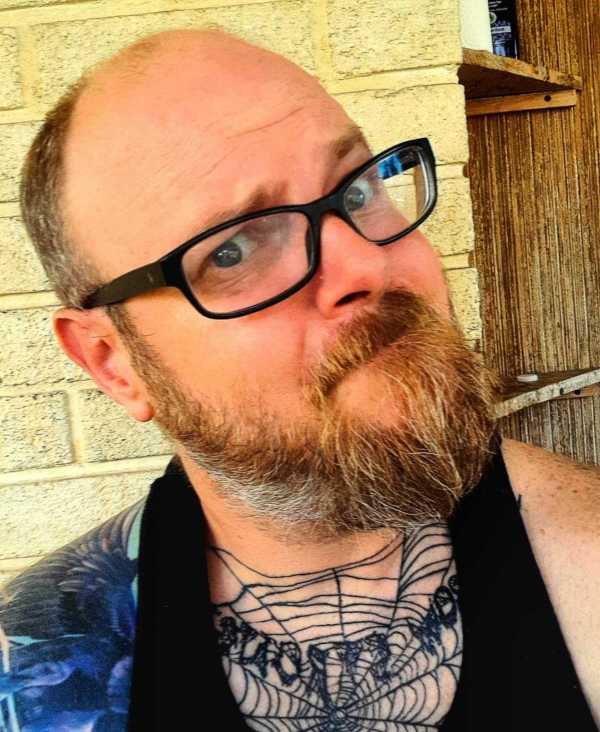
To find more by Devin check out his author page at:
https://devmanderson.wordpress.com/
Discover more from Weird Wide Web
Subscribe to get the latest posts sent to your email.
 Weird Wide Web
One thought on “Tear Stained Pages: An Interview with Mercedes M. Yardley, by Devin M. Anderson”