
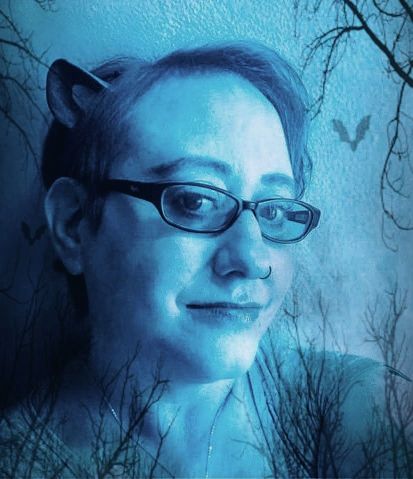
An article by Nora B. Peevy
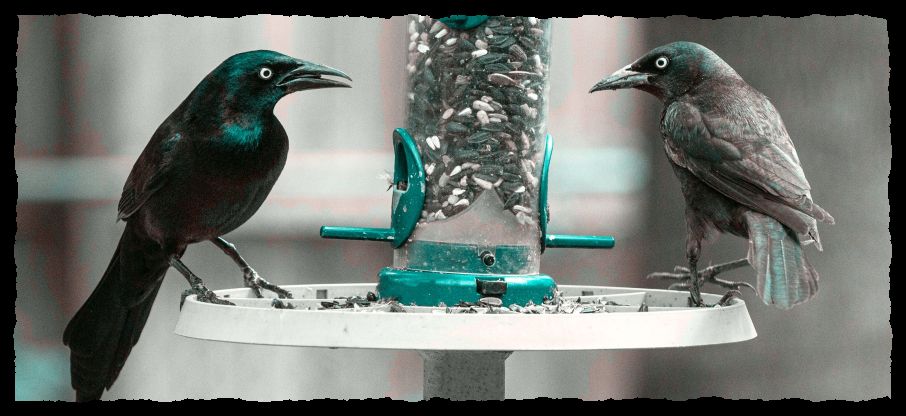
The side of town I moved to is surrounded by Catholic churches, one of the only basilicas in the U.S.A., cemeteries, botanicas, florists, and memorial shops, so naturally, I find my mind wandering to the topic of death, which isn’t a morbid topic to me. I was doing an online search last night and came across an article about moths, this led me to Google different bugs and that led me to Google different animals which are harbingers of death. It’s a dreary Wednesday today as I work on this, the kind of day when the trees are verdant against the slate grey sky, and you can feel summer and mosquitos just around the corner. I’ve been watching grackles rumble for space at the feeder and it’s funny they are not on the list of animals I discovered foreshadowing death. Of all the birds that deserve to be on this list, it’s the grackles. They are the nastiest bunch at the feeder, but they’re not there. There are other birds, though.
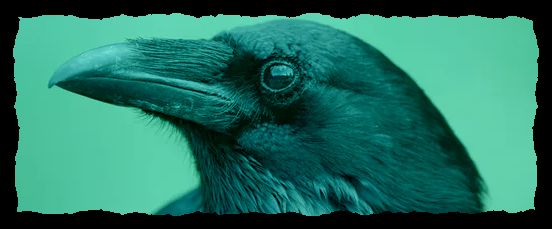
Of course, you’re all thinking about Edgar Allan Poe’s favorite, the raven. The raven is one of three black birds on the list of death harbingers. In Swedish lore it’s synonymous with ghosts, wraiths, and the murdered not given a proper Christian burial. I’d expect Germany to have a dark history with the raven and equate them with damned souls, but the Greeks surprised me. Because Apollo is the god of healing, if you see a raven, it means you’re having a terribly dreadful day and are going to die. The Indigenous peoples believe if a raven kills you, you become one. Particularly of interest was the Maori belief of the soul of a dead person imprisoned until it’s cremated or buried. Imagine if you’re accidentally killed by a raven and no one found you. You’re trapped in a rotting body for eternity if you believe in an afterlife. In western culture ravens are always associated with death and war because a raven’s claw could predict battles and the ravens were always the last seen on the battlefield feasting on the corpses. But I was pleased to learn my black feathered friends in Hinduism are not seen as bad omens of death. In fact, Hindus feed their beloved’s favorite foods to the ravens, hoping their loved one will find peace in the afterlife. I like this image of ravens much more than the doom and gloom western culture gorges itself on.
People always mistake our good friend the raven for the crow, which I expected to find in my internet search. Crows are also carrion birds. Carrion means “decaying dead animals’ flesh.” Well, they also eat live animals too, but I won’t tell you about the baby bunny melee I saw a decade ago because I’m scarred for life, and you don’t need to be also. Anyway, crows have supernatural powers and are lost souls, or they represent the death of a highly respected member of the community. They are also a symbol of transformation because while they eat carrion they also live.
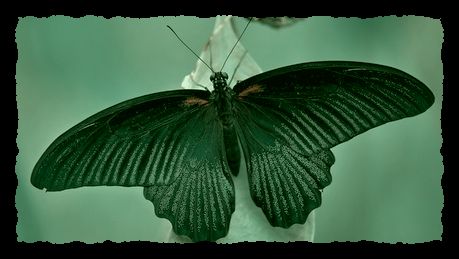
There are a bunch of flying animals on the harbinger of death list, so bear with me. It correlates if you ponder a bit. Death, angels, the grim reaper, ghosts, wraiths, wings, all soaring, floating. But what I didn’t think about was butterflies. I expected moths, but not butterflies. Apparently, in many cultures, primarily in China, the Philippines, and some Central and South American countries black butterflies represent death, not beauty. If a black butterfly lands on your skin it means a death of a loved one. In Celtic and Irish beliefs black butterflies are the souls of the dead who can’t move on from this life. Other cultures associate black butterflies with witchcraft. I associate them with beauty. There are even cultures associating yellow butterflies with death because it is a color of sickness. Poor butterflies.

I also associate moths with beauty, but again, I’m in the minority in some places. Moths too are harbingers of death. The Celts thought of them as death and decay, especially, if they were in the home and a death’s head moth, you were surely on your way to meet your doom or at least, a friend or family was or had already passed and come to visit you. If I show up in your house as a moth someday, please don’t kill me. Just let me outside again.
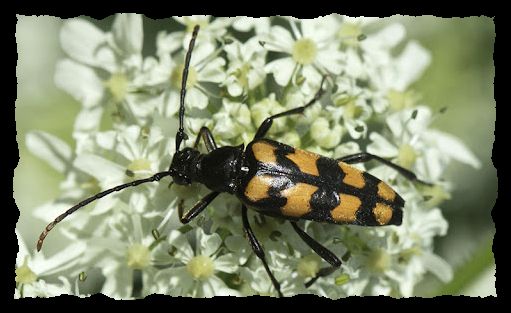
I feel even more sympathetic for the poor deathwatch beetle. What a name to be saddled with, right? In 17th century England if someone fell ill, they laid in bed and heard a tap-tap-tap also referred to as “The Grim Reaper’s Clock.” The faster it got the closer you were to death. Really, it was these poor little oak boring beetles tapping their love messages to each other so they could find a mate, but as usual, when we humans don’t understand something, we must make up a good story to explain it. And what always trumps love? Death. Death is permanent. Love not so much. Well, not always. Words are permanent though, if we remember them, and these romantic beetles inspired Thoreau, Edgar Allan Poe, and Mark Twain.
I know not everyone finds spiders an aphrodisiac either, but my first husband was an arachnologist, and I came to appreciate both spiders and scorpions. Sadly, these two lovely creatures are on the list as well. As humans we suffer pareidolia and look for faces everywhere. I think it’s why we fear insects because they’re tiny aliens invading our space, but it’s even more terrifying when the animal bites you, combining two of our fears – an unknown creature and being eaten. Though positively, scorpions in Egypt represent transformation as many “harbingers” do in other cultures.
Unfortunately, someone forgot to remind the Romans how beautiful the cardinals sing and how colorful they are because they are on the harbinger of doom list. I guess I’m dying today because I filmed one outside my window. Oh wait, I saw one yesterday and the day before that and the day before … The Indigenous peoples believe they are messengers between this world and the next. I like that philosophy better. Someone must be trying to contact me. It’s my father or my third-grade teacher congratulating me on my writing career. Or my grandmother. I haven’t seen her since I was five.
I’ve never seen a vulture, but I expected them to be on the list. Poor birds get such a bad reputation. Except with the Mayans. In Mayan culture they symbolize a revered transition from death to a new life. They are another carrion bird and if sighted death is not far behind. Did you know a group of roosting vultures is a “committee?” Hmm … I will refrain from saying anything else about that, but I think it’s cute when they fly in formation, they are a “kettle.” This is because of the formation of their wings. Sadly, some cultures link them to the devil.
I was walking the dog the other day and personally, I can see why roosters are linked to the devil in some cultures. This rooster had two hens and he mean-mugged me for an entire city block behind a wire fence, crowing every two seconds on an even beat. According to him, I should have died more lives than my cat has, but I’m still here. If you hear a rooster crow in the night, it is a bad omen. If you hear them crow loud and often it is a bad omen. If they don’t crow in the morning, it’s a bad omen. So don’t be a rooster. Just don’t crow. Maybe, learn to sing like Dido. That way nobody will accuse you of being a harbinger of doom.
But then what will you do if you’re a poor buzzard? Buzzards are scavengers and another carrion bird. A bird’s gotta eat, right? I guess it’s not a rewarding job being a bird that recycles on this planet, if you recycle in the wrong way. You’ll end up referred to as a “harbinger of death.” The bright side of this is in medieval Europe it was illegal to kill a buzzard. If you were a buzzard in medieval Europe, you were sacred and if anyone killed you, your murderer was sure to be executed or banished. But even today, when a buzzard passes over, people say “God bless me” or “God save me” so they are spared from The Reaper.

You’re not spared from The Reaper if you see a blackbird. Blackbirds are cursed with being the first bird people see after someone dies because they often hang around cemeteries, abandoned lots, old buildings, or “places where tragedy happened” as the interdweeb said. If I were a bird, I might hang out in all those places, but how would I know a human tragedy happened in a place? Do I know how to use a cellphone or read the newspaper or something? Curious. Don’t even think of seeing one at your work because it gets worse. Someone close to you will die. At least the Egyptians believed they represent the circle of life. Nightingales and cuckoos do not fare so well. Nightingales sing at twilight or dawn, both dark times symbolizing death and times when people are most likely to be awake lying in bed. Cuckoos can mimic the owl, a harbinger of death in many cultures. And robins, those lovely birds we see at the first sign of spring often foretell a death close to you. They are harbingers of doom because they hang out overnight in cemeteries and serenade the dead on their tombstones. If I were stuck six feet under with nothing better to do than take a dirt nap, I would think a personal concert was quite nice, but nope. Apparently, it’s a travesty. Not allowed. Even though it’s a free concert and robins sing better than a lot of musical artists today.
The owl is nocturnal, which automatically is one strike against it. The second strike is that it’s the symbol of Athena. Athena is the goddess of wisdom who was born from the skull of Zeus. Skull. Death. Owl. Harbinger. Not good. The owl is a messenger between worlds. But some cultures believe owls will carry children away from the land of the living and in Egyptian and Nordic cultures, if you dream of an owl, the person that is the owl in the dream will die in your life. So please don’t dream of me in owl fashion. And don’t think of me as a rat either, for obvious reasons. They’re associated with the plague and when seen leaving a house it’s a sign of sickness. But think of me as a rat. Please do. Rats are smart, cute, and loyal. Not diseased.
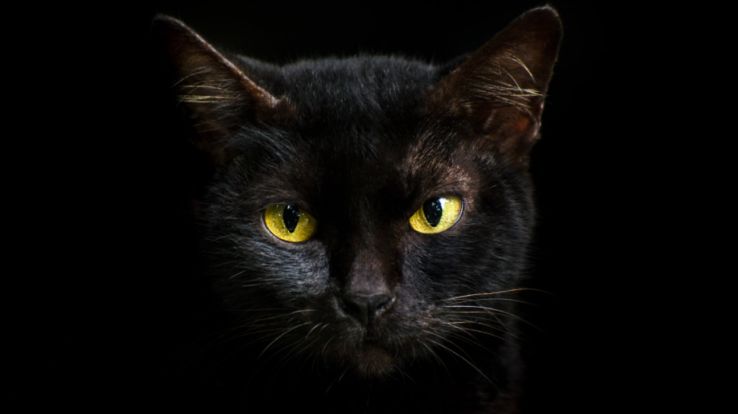
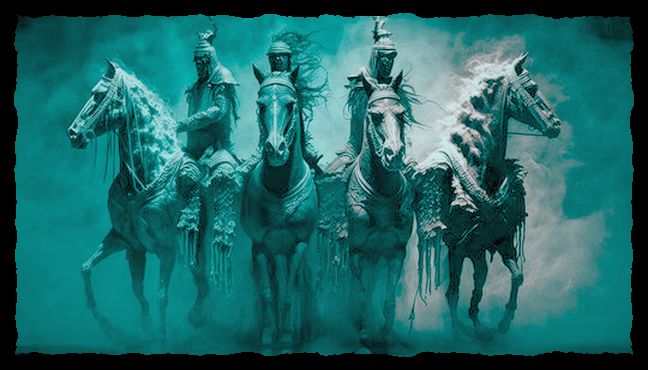
Just like black cats are not bad luck, not evil, and not diseased, though in medieval Europe they were slaughtered and plastered into walls to ward off ghosts, death, and witches. Bulls have been slaughtered too and are associated with death in ancient Rome, India, Indonesia, and Egypt. Bats are dark creatures of the night and the underworld. If you find a dead bat it means there will be a death, a change in your life that will be associated with grief, which you should prepare for at once. Don’t plan to take a vacation, unless it’s permanent or you have money to plan someone’s burial and fly to Aruba. And then there’s two harbinger of doom references for horses; one The Four Horsemen of the Apocalypse and the other the horse returning without its rider.
Not to sound speciest, but if horses are on the list, then I guess it’s not surprising there are three other lovely bird species on the list, wrens, sparrows, and swans. Everyone has heard of the phrase “singing their swan song,” but people have taken this literally because they’ve seen a swan singing and then it died. Don’t be around a singing swan because you might be next. Also, don’t invite any cute wrens to your backyard birdfeeder. If one accidentally flies into your house in the winter, you’re guaranteed to die by spring. (There is an uptake in deaths in the colder weather, but nobody is sure why this happens.) It’s much better to be the symbol of a loved one watching over you, which is what I will be imagining every wren to be from now on, as do the Celts. As for the sparrow, that cute tiny white and brown bit of fluff, in Japan they are a woman who died in childbirth. In Hinduism they are messengers of the gods as they are in western cultures; they like to hang out in cemeteries. Who doesn’t? There are no people to bother you and the view is great. I do it all the time. I don’t have to worry about being seen in pairs in a cemetery, though, which is where the sparrow’s bad luck comes in. One is okay, but two is too much.
I would like to make a formal apology to all the animals that have made “The Harbingers of Death List.” Humans are discombobulated, arrogant, asshats. We have invaded your home and made you the object of our doom. To you, dear deathwatch beetle, black butterflies, yellow butterflies, moths, vultures, buzzards, ravens, crows, cardinals, bats, black cats, bulls, horses, owls, rats, nightingales, cuckoos, robins, wrens, spiders, scorpions, sparrows, blackbirds, and roosters, I humbly apologize and I place myself on “The Harbingers of Death List” in 2024. Please reserve me a stylish reaper cape and a scythe that is not too heavy because I’m not a fan of the summer heat. Thank you. That is all.
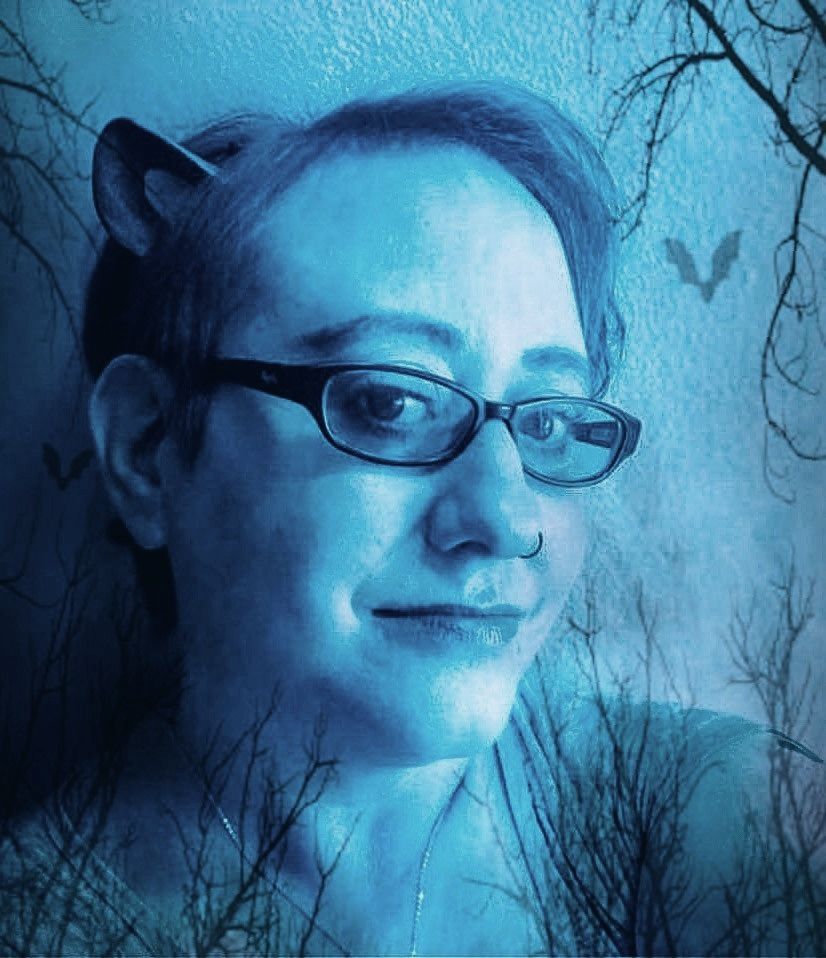
Nora B. Peevy is a cat trapped in a human’s body. Please send help or tuna. She is an Olympic champion sleeper and toils away for JournalStone/Trepidatio Publishing as a submission reader, a reviewer for Hellnotes, the co-founder and co-editor of Tiny Tales of Terror Quarterly and is reading scripts for The H.P. Lovecraft Film Festival for the second year. Her quirky work is published in Eighth Tower Press, Weird Fiction Quarterly, The Wicked Library Podcast, Sudden Fictions Podcast, and other places. Her first novelette, For the Sake of Brigid just came out in May of 2024 and her first novel will debut later this year. As an avid photographer, Nora can also be found on Getty Images. Holding a Bachelor of Arts in English with a Concentration in Creative Writing, you can find her on Facebook (as Onyx Brightwing) begging to escape her human body or get tuna. She naps in Milwaukee, Wisconsin.
Discover more from Weird Wide Web
Subscribe to get the latest posts sent to your email.
 Weird Wide Web
One thought on “Bingo! I’ve Got Bingo! They’re All on The Death Harbinger List!”